



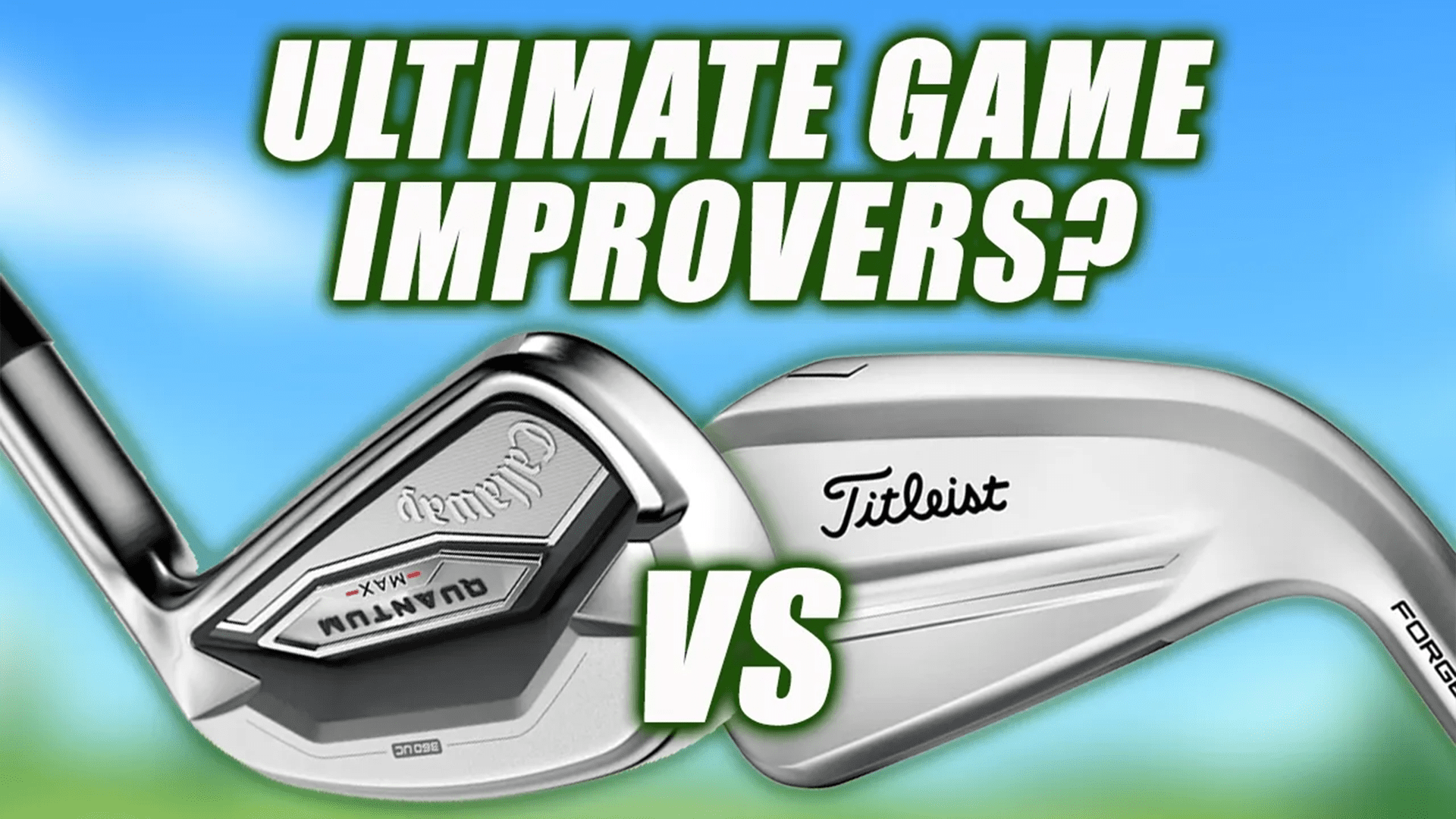
Titleist T350 and Callaway Quantum Max: Which Game Improvement Iron Actually Performs Better?
Game improvement irons have changed massively over the last few years. They are no longer just oversized heads designed purely for golfers with slow swing speeds. Modern game improvement irons now sit in a much more interesting category where forgiveness, launch, consistency and distance all blend together.
That raises an important question:
If you generate decent clubhead speed but still want help from the clubhead, which iron actually performs better?
To find out, we put the Titleist T350 and Callaway Quantum Max head to head in a proper on course style comparison focused on the things that actually matter to golfers.
This was not simply about whichever iron carried the furthest.
The testing focused on:
- Forgiveness across the face
- Launch and peak height
- Spin and descent angle
- Carry consistency
- Feel and sound
- Looks at address
- Overall playability
- Value for money
Game Improvement Irons Are Not Just for Slow Swing Speeds
One of the biggest myths in golf equipment is that forgiving irons are only suitable for slower swingers.
That simply is not true anymore.
A golfer can swing a 7 iron at close to 90 mph and still need help with strike consistency, launch and directional control. In fact, faster swingers often benefit hugely from forgiveness because poor strike quality becomes even more penal at higher speeds.
That is why this category exists.
Modern game improvement irons are designed to:
- Protect ball speed on mishits
- Help launch the ball higher
- Improve consistency across the face
- Deliver playable distance rather than just raw distance
For this test, Chris handled the hitting duties with a 7 iron speed sitting in the high 80s mph range. That made the comparison much more representative for the average golfer who still swings it reasonably well but wants more consistency.
Callaway Quantum Max Review
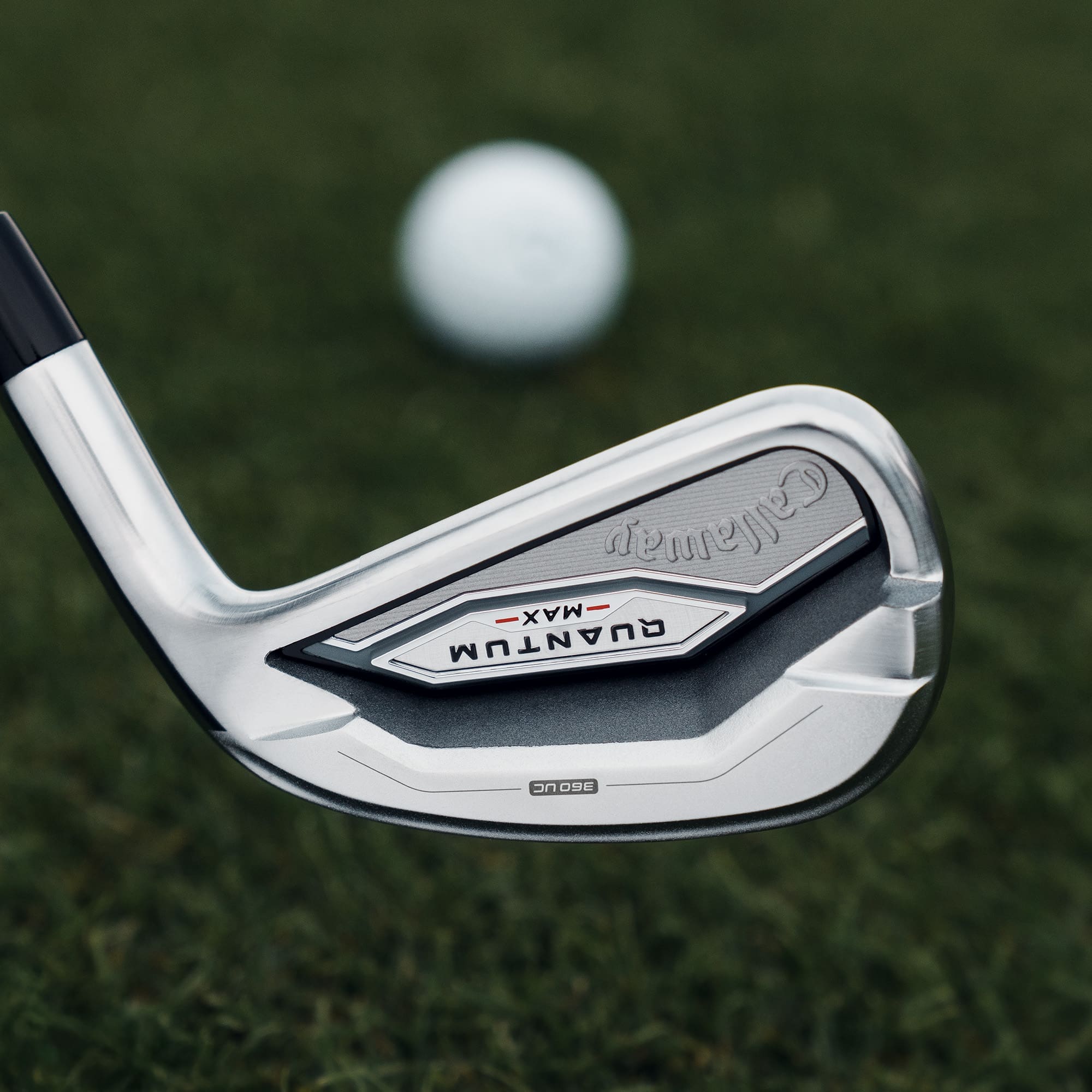
The Quantum Max sits firmly in the traditional game improvement category.
It looks larger behind the ball and clearly gives the impression that it is there to help. For many golfers, that is exactly what they want to see.
Interestingly, it also feels like Callaway has moved back toward the type of iron that made them dominant in the game improvement market years ago. Some of their recent irons became visually sleeker and more player focused, but the Quantum Max embraces forgiveness openly.
What the Quantum Max Did Well
The biggest positive straight away was forgiveness.
Even with poor swings and inconsistent strikes, the carry numbers held together impressively well. Chris hit shots from all over the face and all over the target line, but the drop off in distance was not dramatic.
That is exactly what golfers want from this category.
At around 88 mph club speed, better strikes carried approximately 175 yards with a 7 iron, which is excellent for a forgiving iron.
More importantly, poorer strikes still travelled enough distance to remain playable.
Where the Quantum Max Struggled
The issue was not speed.
The issue was trajectory.
The Quantum Max launched lower than expected, peaked lower and came into greens on a much flatter descent angle. That matters because distance alone means very little if the ball cannot stop effectively on the green.
A shallow landing angle often leads to excessive rollout, particularly on firmer greens.
This is one of the common trade offs with very strong lofted distance irons. They can produce impressive carry numbers, but the ball flight can become difficult to control into greens.
That was the main concern here.
The Quantum Max produced good distance and strong forgiveness, but the trajectory looked too flat to fully trust.
Feel and Sound
Feel was not the strongest area for the Quantum Max either.
It certainly felt fast, but the sound and sensation at impact were more clicky than premium. There was plenty of face rebound, but not necessarily the soft or solid feeling that inspires confidence over time.
That matters more than golfers sometimes admit. Feel influences trust, and trust matters enormously with irons.
Quantum Max Summary
Best quality: excellent forgiveness across the face
Also strong: good speed and carry distance
Main weakness: flat trajectory and shallow descent angle
Secondary weakness: sound and feel lacked refinement
Titleist T350 Review
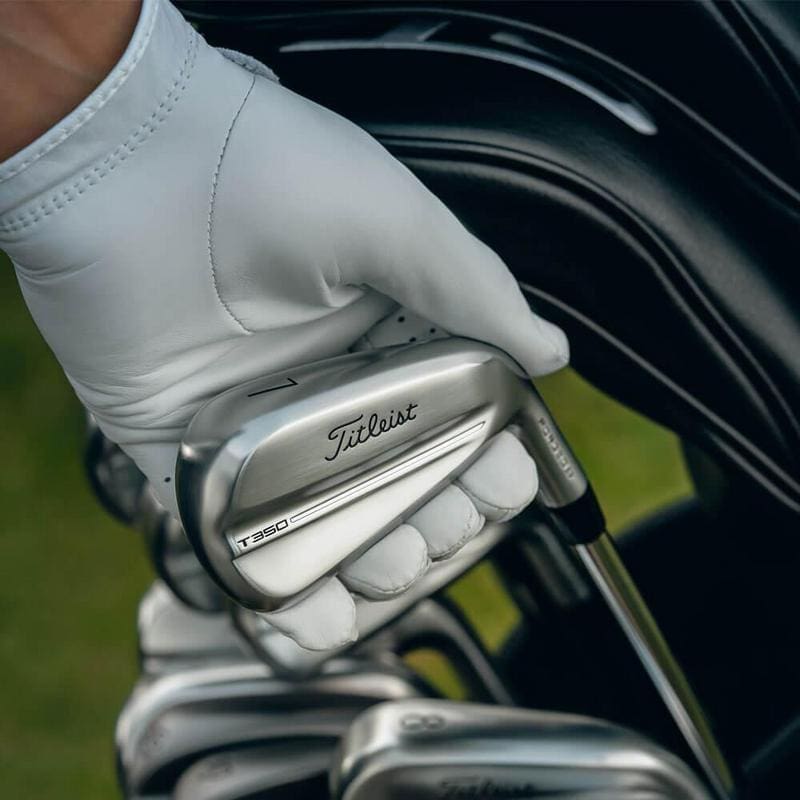
Titleist T350 sits at the game improvement end of the T-Series family from Titleist, just below the hollow body distance iron of T250.
As soon as the T350 entered the test, the differences became obvious.
The most immediate change was ball flight.
The T350 launched significantly higher than the Quantum Max and maintained a much more playable trajectory throughout the hitting window.
That higher flight translated into a steeper descent angle and much better stopping power.
Higher Flight and Better Green Holding
This is where the T350 really separated itself.
Even though carry distances between the two irons ended up being very similar overall, the T350 produced a flight that looked far more playable on the course.
The ball launched higher, reached a stronger peak height and descended more steeply into the target.
That is exactly what golfers should want from a game improvement iron.
A couple of extra yards means very little if the ball cannot hold a green properly.
The T350 looked much more like an iron you could confidently attack flags with.
Forgiveness Was Still Excellent
Importantly, the T350 did not suddenly become difficult to hit.
Chris still hit some poor strikes during testing including heavy shots and toe strikes, yet the iron remained forgiving enough to keep those misses playable.
That is what made the performance so impressive.
The T350 combined forgiveness with a much more balanced trajectory profile.
Rather than simply producing speed, it produced useful speed.
Feel, Sound and Looks
This was arguably the biggest separation point between the two irons.
The T350 looked cleaner, sounded better and felt far more premium throughout testing.
Titleist has done an excellent job with the entire T Series family and the T350 benefits massively from that design DNA. Even though it is a forgiving iron, it still looks sleek and compact enough to appeal to better golfers.
Compared directly against the Quantum Max, the T350 looked significantly more refined behind the ball.
For many golfers, that alone will influence the buying decision before a shot is even hit.
The Numbers: What Actually Separated Them?
Interestingly, this was not a distance blowout.
Carry numbers between the two irons were very close.
The key differences came elsewhere:
- Quantum Max produced slightly more raw carry distance
- T350 launched higher
- T350 landed steeper
- T350 offered better stopping power
- Spin numbers were broadly similar
- Quantum Max flew flatter and released more after landing
That final point mattered the most.
The Quantum Max could occasionally edge ahead through the air, but it was also more likely to continue rolling significantly after landing.
The T350 produced a much more playable flight overall.
Why Mishits Matter Most
With game improvement irons, bad shots are far more important than perfect ones.
Anyone can flush one shot.
The real test is what happens when contact moves slightly toward the toe, the strike gets heavy or the delivery is inconsistent.
On that front:
- Quantum Max preserved ball speed extremely well
- T350 also offered strong forgiveness
- T350 delivered the better combination of forgiveness and playable trajectory
That balance ultimately became the deciding factor.
Does Shaft Choice Change the Result?
There was discussion around whether a different shaft setup could improve the Quantum Max launch conditions.
Potentially, yes.
However, the overall feeling from the testing was that a shaft adjustment alone was unlikely to completely transform the trajectory characteristics.
Minor tweaks are possible, but the lower launching nature of the head itself still appeared to be the dominant factor.
If a golfer needed substantially more height and stopping power, changing the head would likely make more sense than relying purely on shaft changes.
Looks Matter More Than Golfers Admit
This is one area where the T350 simply won comfortably.
The T350 has a much cleaner and more premium appearance. It looks closer to a modern hollow body distance iron than a traditional oversized game improvement club.
The Quantum Max is more visually obvious in its forgiveness focused design.
Some golfers will appreciate that confidence inspiring shape. Others will prefer the cleaner appearance of the Titleist.
If aesthetics matter to you, and for most golfers they absolutely do, the T350 has a clear advantage.
Price: The Quantum Max Advantage
The strongest argument for the Quantum Max is price.
The T350 sits at a higher price point, and for golfers working to a tighter budget, that will naturally become part of the conversation.
However, once you compare:
- looks
- feel
- sound
- launch
- descent angle
- stopping power
- overall playability
it becomes difficult to argue that the Quantum Max outperformed the T350 overall.
Final Verdict: Titleist T350 and Callaway Quantum Max
If the question is simply which iron performed better overall, the answer was fairly straightforward.
The Titleist T350 came out on top.
Not because it massively outdistanced the Quantum Max.
It won because it delivered the stronger all round package:
- Better trajectory
- Better stopping power
- Better feel and sound
- Better looks at address
- Better overall playability
The Quantum Max still has a place in the market. It is forgiving, powerful and offers solid value for money.
But if you are choosing based on total performance rather than just raw carry distance, the T350 was the standout iron in this comparison.
The Bigger Takeaway
Perhaps the most important lesson from this test is that game improvement irons should never be judged purely by distance.
And they definitely should not be dismissed as irons only suitable for slower swingers.
The right iron is the one that gives a golfer enough speed, enough forgiveness and a trajectory that actually works on the golf course.
Sometimes that means sacrificing a few yards of carry in exchange for better control and improved green holding.
More often than not, that is a trade worth making.
And in this test, that is exactly why the T350 came out on top. If you would like to try either of these irons, we offer them fully customised in a free custom fitting in any AFGolfStore! Learn more here